






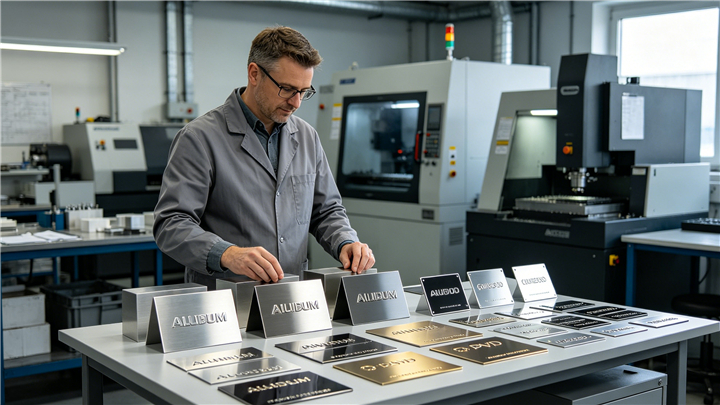
Customized Electronic Components & Nameplates: From Sample Development to Mass Production
Custom electronic components and precision nameplates are essential supporting parts for consumer electronics, digital cameras, communication devices and household appliances. Many overseas OEM buyers struggle with unstable delivery, inconsistent quality and long lead time when sourcing custom parts. A mature manufacturer should own a complete closed-loop system covering sample evaluation, design adjustment, pilot trial and standardized mass production. This article introduces our full customized production workflow at HSINHO Electronics from prototype development to bulk shipment.
Stage 1: Technical Confirmation & Sample Development
After receiving customers’ drawings, specification sheets or physical samples, our engineering team launches the first round of technical review. Engineers check dimension tolerance, material selection, surface finishing requirements including anodizing, PVD, sputtering, epoxy dripping or electroforming according to end-product application environment such as indoor daily use or outdoor high-temperature & humid working conditions.
Once the technical plan is finalized, we arrange small-batch prototype sampling. For electroformed nickel logos and ultra-thin metal nameplates, customized molds are opened precisely to control edge precision and three-dimensional emboss effect. For plastic housings and hardware accessories, trial die casting and first-piece inspection are carried out. Every finished prototype passes strict lab tests covering appearance check, color & gloss measurement, adhesive peeling test and environmental anti-corrosion test. Qualified samples are sent to clients for confirmation; if revisions are needed, we optimize formulas and crafts rapidly within short turnaround until customer approval.
Fast sample turnaround becomes a core competitive advantage in current global procurement. Benefiting from our group’s cross-regional resource layout with factories in Taiwan, Shanghai, Thailand and Malaysia, we shorten sample lead time effectively to meet small-batch quick customization demands from global electronic brands.
Stage 2: Pilot Production & Process Optimization
After sample confirmation moves to pilot trial production. The production department arranges small-lot pilot run following finalized production parameters. During pilot manufacturing, IPQC inspectors carry out regular in-process patrol inspection to track hidden defects like uneven printing, poor coating adhesion and dimensional deviation caused by unstable equipment parameters.
All abnormal problems are collected and fed back to engineering for process improvement before formal mass production. This pre-production step largely reduces reject rate in subsequent bulk orders and avoids huge economic loss for buyers. We also adjust raw material batch proportion and auxiliary matching such as paint, hardener and thinner to stabilize surface finish consistency of nameplates and hardware parts.
Stage 3: Formal Mass Production & Full-Range QC Management
With verified pilot data, workshops start formal mass production based on order quantity. Our factory is equipped with complete automatic production equipment for stamping, laser engraving, vacuum coating, electroforming and surface treatment, and nearly one hundred professional operators manage each production line.
Quality control runs through every production link strictly as our standardized QC list: incoming raw material inspection, dimensional precision testing, surface & color appearance control, adhesion & back glue performance verification, in-process patrol check, finished product full inspection or random sampling, plus final pre-shipment inspection and hazardous substance test complying with RoHS and REACH regulations. Unqualified products are picked out directly to ensure only qualified goods enter packaging process.
Stage 4: Standard Packaging & Global Shipment
Qualified finished components and nameplates go into standardized anti-scratch packaging. Different packaging solutions are adopted according to product features: fragile electroformed logos are wrapped with anti-pressure bubble bags; metal nameplates are separated with partition paper to prevent scratch during transportation.
Depending on customers’ destination and logistics requirement, goods are arranged for sea freight, air freight or express delivery. Thanks to our overseas production bases in Southeast Asia, we can arrange local delivery for clients in Thailand, Malaysia and nearby regions to cut logistics cost and shorten delivery cycle.
Conclusion
The whole customized service chain from sample development to mass production reflects our systematic manufacturing strength. HSINHO Electronics focuses on tailored electronic accessories and precision nameplates, supporting both small customized trial orders and large-volume bulk orders for worldwide purchasers. Strict process control and mature production system help global customers solve customization troubles and realize stable long-term procurement cooperation.